October 19, 2026
How to choose fuel break width for a given fuel model
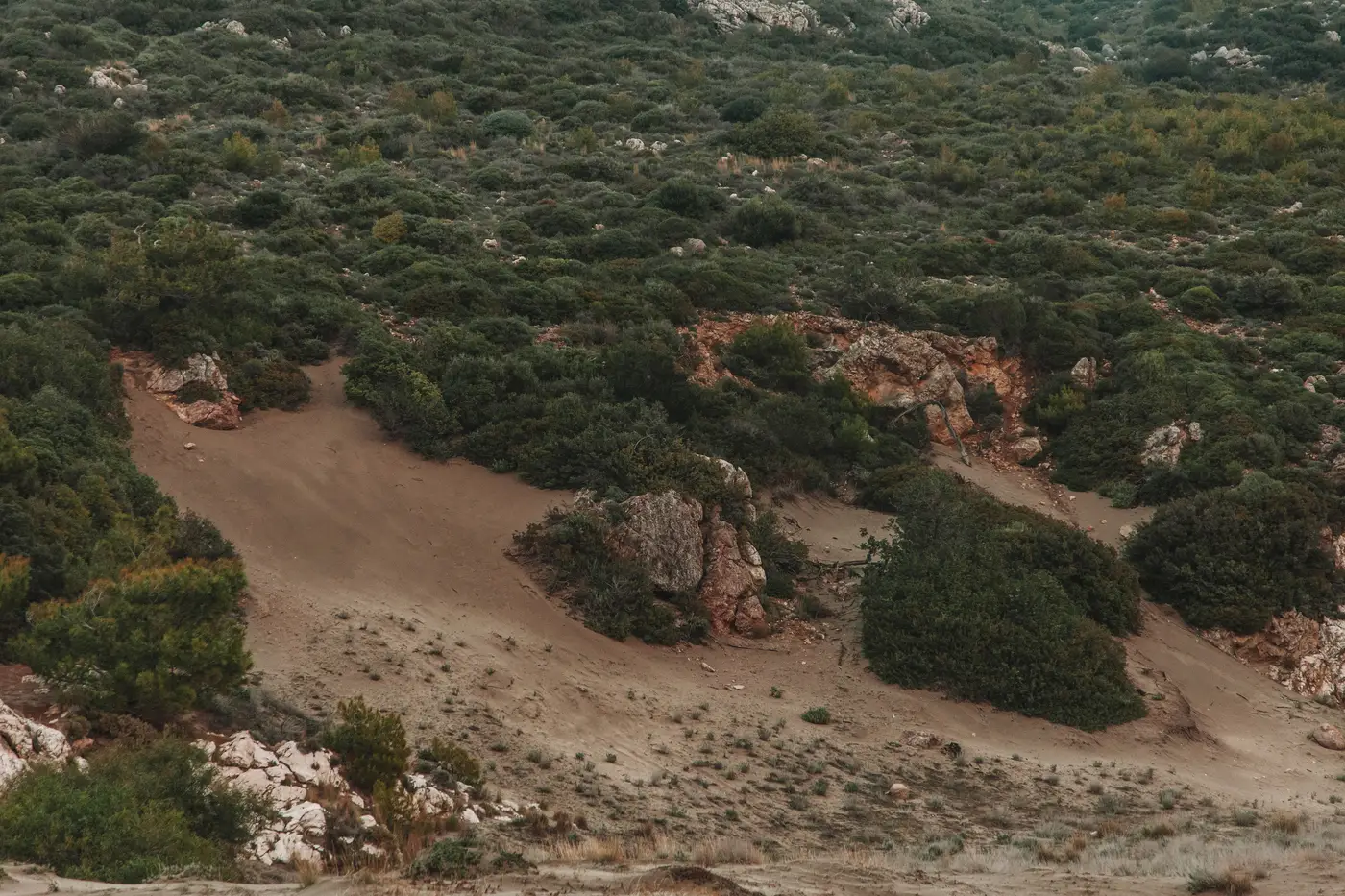
Ask five fuels planners how wide a break should be and you'll get five different numbers, because the real answer is "it depends on what's burning next to it." A break cut to spec for a grass flashy fuel model will do nothing in adjacent chamise or manzanita at the same width. Width follows fuel model, not the other way around.
Start with flame length, not a standard number
There's no single agency-wide width that works across fuel types. The working rule most fuels crews use is to size the break to roughly two to three times the flame length expected under design weather for the fuel model you're dealing with on that stand, then add for slope and wind alignment. A grass fire (Anderson models 1-3) running with 2-4 foot flame lengths can be stopped with a modest break and hand or engine crews. Drop that same crew into a model 4 or model 6 shrub stand with 8-15 foot flame lengths and spotting potential, and the break needs to be wider, cleared to mineral soil in spots, and backed up by a secondary line.
Timber litter models (8-10) behave differently again. Surface flame lengths can look moderate, but if canopy bulk density and crown base height put the stand into torching or crown fire territory, a narrow surface-fuel break won't matter because the fire is moving through the crowns above it. That's a fuel break design problem a ground crew walking the unit won't always catch from the understory alone.
Why the fuel model on the map isn't always the fuel model on the ground
Most agencies still size breaks off fuel model layers built years ago, sometimes from aerial photo interpretation that predates the last fire, the last beetle kill, or the last decade of brush regrowth. A stand mapped as model 2 (grass with scattered shrub) five years ago can look a lot more like model 4 (chaparral) today if shrub cover closed in. Conversely, a stand that burned and came back as flashy grass still reads as timber litter on an old layer. Sizing a break to the wrong fuel model means either overbuilding on a limited budget or undersizing on a line that won't hold.
This is the gap between Anderson fuel model classes as a classification system and fuel model as it actually exists on a given acre this season. The classes themselves don't change, but which class applies to a stand does, and dryness compounds it: the same canopy structure carries very different fire behavior wet versus cured out.
Siting the line itself
Width is only half the design. Where you put the line matters as much as how wide it is. Ridgetops and saddles let a narrower break do more work because fire has to fight slope to reach it. Mid-slope breaks on steep ground need to be wider to account for upslope runs and ember cast landing past the line. Breaks tied into roads or existing disturbance get a built-in buffer the design width doesn't have to cover alone.
Practical sequence for sizing a break on a given unit:
- Identify the dominant fuel model across the planning polygon, since the fuel model at the access point where the crew walked in often differs from what's further into the stand.
- Pull design-weather flame length and spread assumptions for that fuel model.
- Size the break at roughly two to three times flame length, adjusted up for slope alignment and known wind corridors.
- Flag any part of the line where canopy structure suggests crown fire potential, since surface-fuel width alone won't address that stretch.
- Re-check the fuel model assumption before cutting if the last ground survey or map update is more than a season or two old.
That last step is where a lot of fuel break plans go stale. Field transects cover a sample of the unit, not all of it, and standard fuel maps get updated on agency budget cycles rather than fire-season timelines. An annual canopy-and-dryness fuel model layer built from high-resolution imagery gives planners a way to re-check the fuel model class across a full planning unit before committing crew time and dozer hours to a line sized for last year's vegetation.
If your break designs are still leaning on a fuel map older than the stand itself, it's worth taking a look at what Fuel Load Mapping covers for your unit before the next cutting season.